4-1-0 Smoked Pork Ribs Recipe
Nope, it's not a typo. 4-1-0 is correct. Most backyard rib recipes beat the same drum: 3 hours smoke, 2 hours wrapped, 1 hour sauced. That classic 3-2-1 ribs method works, and it’s popular for a reason — it gives people a simple structure: smoke, wrap, then finish unwrapped with sauce. But if you like ribs with better bark, a little more bite, and less “fall-apart pot roast” texture, this 4-1-0 smoked ribs method is the move. The 3-2-1 method is widely described as 3 hours unwrapped smoke, 2 hours wrapped, and 1 final hour unwrapped to sauce or finish the ribs.
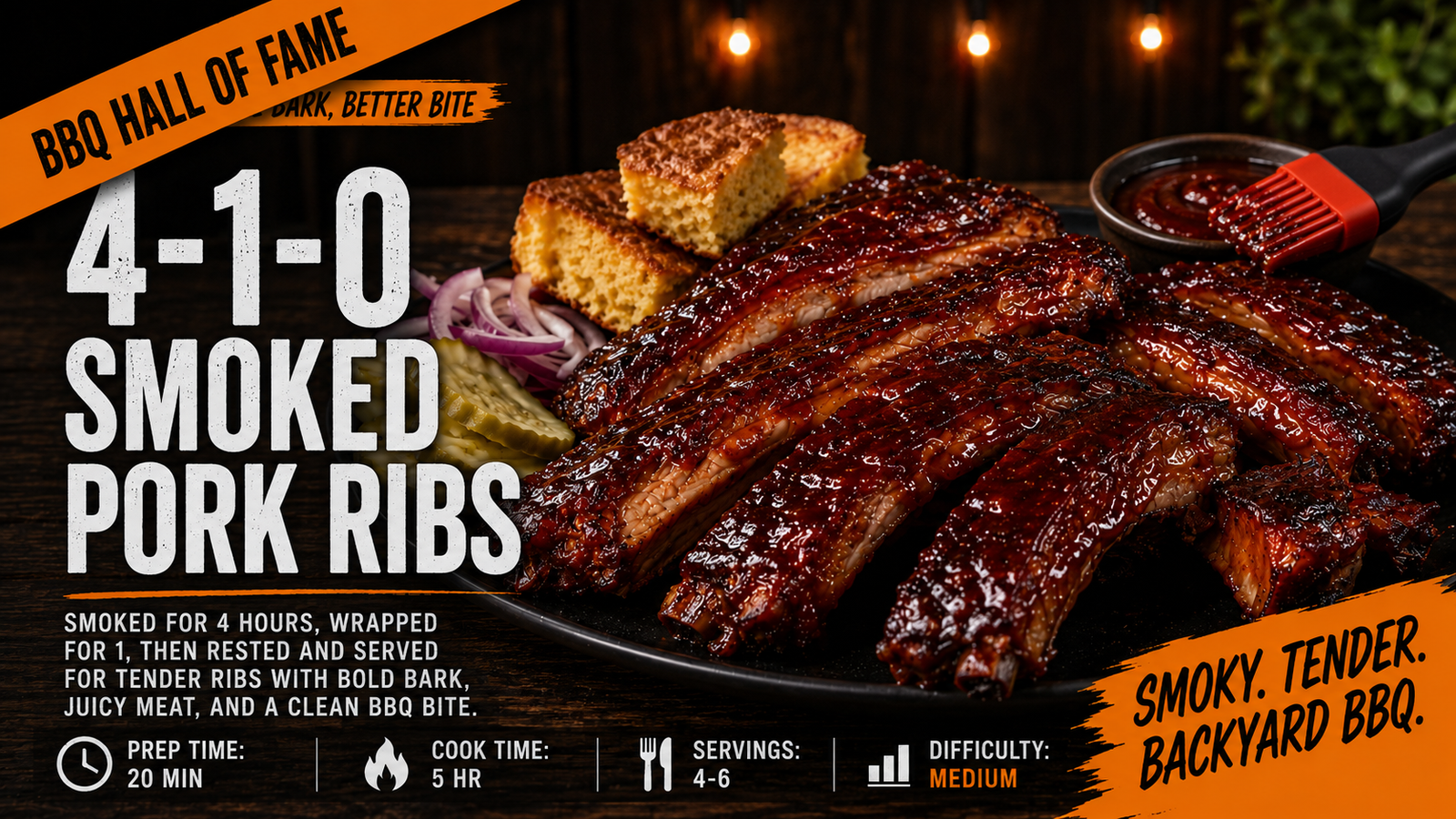
This recipe is built around a simple backyard rhythm: smoke for 4 hours, wrap for 1 hour, rest, and serve. No final hour back on the smoker. No drying the ribs out after they’re already tender. You get more smoke time up front, enough wrap time to push tenderness, and then you let the rest do its job.
The result is a rack of pork ribs with real bark, deep smoke color, tender meat, and a clean bite. Not tough. Not mushy. Not falling apart before you even pick them up. Just proper backyard ribs with a little tug, a lot of flavor, and enough juice to make people hover around the cutting board.This method works great for St. Louis-style ribs and can also work for spare ribs. Baby backs usually cook faster, so they may need a shorter timeline. The goal is not to worship the clock. The goal is to use the clock as a guide and let the ribs tell you when they’re ready.
Why You’ll Love This Recipe
These ribs are made for backyard cooks who want something easy but still legit. The 4-1-0 method keeps the process simple: smoke long enough to build bark, wrap just long enough to tenderize, then rest and slice.
The big advantage over traditional 3-2-1 is texture. A 2-hour wrap can push ribs into fall-off-the-bone territory, which some folks love, but it can also soften the bark and make the meat a little too loose.
With 4-1-0, you protect the bark better and keep the ribs tender without turning them mushy. You can still include the 3-2-1 method as an option for readers who want ultra-soft ribs. But this post highlights the 4-1-0 method because it gives you a better balance of smoke, bark, and bite.
4-1-0 Ribs vs. 3-2-1 Ribs
The classic 3-2-1 ribs method is easy to remember: smoke for 3 hours, wrap for 2 hours, then finish unwrapped for 1 hour, often with sauce. It’s a great beginner framework because it gives people a clear plan and usually delivers very tender ribs. Too tender in my opinion. Anyone that has tried ribs that are bite through tender (not fall of the bone) have been pleasantly surprised.
The 4-1-0 method changes the rhythm:
-4 hours unwrapped smoke
-1 hour wrapped
-0 final smoke time
-Rest and serve
That longer smoke stage gives the bark more time to set before the wrap. The shorter wrap keeps the ribs tender without steaming them into mush. Then you rest them instead of putting them back on the smoker for another hour.
I've tried a few different rhythms, 3-1-0 for example. Works just like 4-1-0 but with a little less time in the smoke. And you might need a little longer in the wrap.
When to Use 3-2-1 Instead
Use 3-2-1 if you want very soft, fall-off-the-bone ribs. It’s also a good option if you’re cooking for people who prefer ribs that don’t need much bite.
Use 4-1-0 if you want better bark, stronger smoke flavor, and ribs that still hold together when sliced. That’s the method this recipe is built around.
Best Ribs to Use
For this recipe, use St. Louis-style pork ribs if you can. They’re trimmed evenly, cook consistently, and give you a good meat-to-fat balance. Spare ribs also work, but they may need a little more time depending on size.
Baby back ribs are smaller and leaner, so they may cook faster. If using baby backs, start checking tenderness earlier during the wrap stage.
Best Wood for Smoked Pork Ribs
Pork ribs can handle sweet smoke, bold smoke, or a mix of both.
Best picks:
-Apple wood for mild sweet smoke
-Cherry wood for deep color and a little sweetness
-Pecan wood for rich, smooth BBQ flavor
-Hickory wood for classic BBQ smoke
-Oak wood for clean, steady smoke
For the best backyard flavor, run cherry and hickory or apple and pecan. Cherry helps build that deep rib color, while hickory or pecan gives the smoke some backbone.
Best Tips Before You Start
Remove the membrane from the back of the ribs (this is the age old debate - to remove or not remove - You do you...). It can get chewy and block seasoning from getting into the meat.
Season the ribs and let them sit for 30 minutes while the smoker heats. The rub should look wet and tacky before the ribs go on.Don’t spritz too early. Let the rub set first. If you spray too soon, you can wash off the bark before it forms.
Wrap when the bark is set, not just when the timer says so. If the rub wipes off on your finger, keep smoking.
Don’t drown the ribs in liquid during the wrap. A little butter, brown sugar, honey, or apple juice is plenty.Rest the ribs after the wrap. That short rest helps the juices settle and keeps the ribs from falling apart when sliced.
The Secret Pitmaster Tip
The biggest rib mistake is chasing “fall-off-the-bone” like it’s the only goal. Good ribs should have tenderness, but they should still hold together when you slice them. You want a clean bite, not meat that slides off like it came out of a crockpot.
With the 4-1-0 method, start checking tenderness during the wrap. If the ribs are already bending nicely and probing tender after 45 minutes wrapped, don’t force the full hour. If they still feel tight after 1 hour, give them a little more time. The method is 4-1-0, but the ribs still get the final vote.
Optional Sauce Finish
This recipe is called 4-1-0 because you do not need a final hour back on the smoker. But if you like sticky glazed ribs, brush sauce on right after unwrapping while the ribs are hot. The heat from the meat will help the sauce tighten slightly during the rest.
If you want a tackier glaze, place the unwrapped ribs back on the smoker for 10 to 15 minutes, not a full hour. That keeps the spirit of 4-1-0 while giving the sauce a little grip.
Final Thoughts
Ribs are by far one of the most fun BBQ foods to cook. I'd go as far to say I enjoy cooking them just as much (if not more) than eating them. The Prep, the longer cook, the perfect difficulty level to get the satisfaction at the end when they turn out just how you wanted. And the smile on everyone's face, covered in BBQ sauce is priceless.
Ribs are great to experiment with, different rubs, sauces, techniques - you can't go wrong!
FAQ
What is the 4-1-0 method for ribs?
The 4-1-0 method means you smoke the ribs unwrapped for 4 hours, wrap them for 1 hour, then rest and serve. There is no final 1-hour unwrapped stage like the traditional 3-2-1 method.
How is 4-1-0 different from 3-2-1 ribs?
The 3-2-1 method uses 3 hours of smoke, 2 hours wrapped, and 1 final hour unwrapped. The 4-1-0 method gives you more smoke time, less wrap time, and no final hour, which helps protect the bark and keep the ribs from getting too soft.
What temperature should I smoke ribs at?
Smoke ribs at 250°F for this method. It’s hot enough to build bark and render fat without dragging the cook all day.
When should I wrap ribs?
Wrap ribs when the bark is set and the color looks right, usually around 165°F to 175°F internal. If the rub still wipes off easily, keep smoking.
What internal temperature are ribs done?
Ribs are often tender around 195°F to 203°F, but tenderness matters more than the exact number. Pork is considered safe at 145°F with a 3-minute rest, but ribs need higher temperatures to break down connective tissue and eat tender.
Should ribs fall off the bone?
That depends on preference, but for backyard BBQ with a better bite, ribs should be tender and pull cleanly from the bone without completely falling apart.
Can I use baby back ribs for the 4-1-0 method?
Yes, but baby backs cook faster than St. Louis ribs. Start checking them earlier, especially during the wrap stage.
Should I sauce ribs before or after wrapping?
For this method, sauce after unwrapping or right before resting. If you want it tacky, put the ribs back on the smoker for 10 to 15 minutes after saucing.
What wood is best for pork ribs?
Cherry, apple, pecan, hickory, and oak all work well. Cherry and hickory together give great color and classic BBQ flavor.
Can I make these ribs without a smoker?
Yes. Cook them in the oven at 250°F using the same timing, then finish uncovered or under a broiler for a few minutes if you want more color. You won’t get real smoke, but smoked paprika in the rub helps.
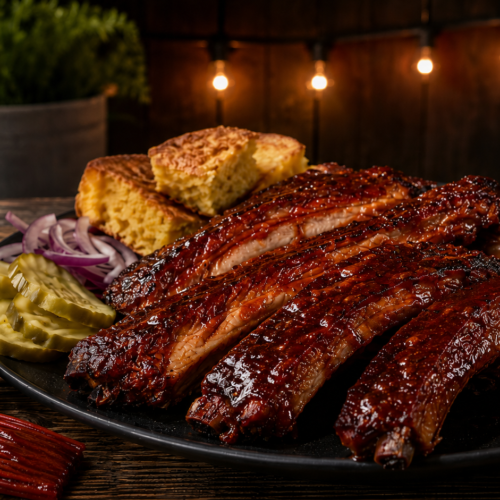
4-1-0 Smoked Pork Ribs
Equipment
- Smoker or pellet grill
- Apple, cherry, pecan, hickory, or oak wood pellets/chunks
- Instant-read thermometer
- Leave-in meat thermometer, optional
- Pink butcher paper or heavy-duty foil
- Sheet pan or large tray
- Large cutting board
- Sharp knife
- Butter knife or paper towel for membrane removal
- Spray bottle, optional
- Basting brush
- BBQ gloves
- Black nitrile gloves, optional
Ingredients
For the Ribs:
- 2 racks St. Louis-style pork ribs
- 2 tablespoons yellow mustard
- 1 tablespoon apple cider vinegar
- 1/2 cup apple juice for spritzing or wrapping
- 1/4 cup BBQ sauce optional for finishing
For the BBQ Rub:
- 1/4 cup brown sugar
- 2 tablespoons smoked paprika
- 2 tablespoons kosher salt
- 1 tablespoon black pepper
- 1 tablespoon garlic powder
- 1 tablespoon onion powder
- 1 tablespoon chili powder
- 1 teaspoon mustard powder
- 1/2 teaspoon cayenne pepper optional
For the Wrap:
- 4 tablespoons butter sliced
- 2 tablespoons brown sugar
- 2 tablespoons honey
- 2 to 4 tablespoons apple juice
- 2 tablespoons BBQ sauce optional
Instructions
- Prep the ribs. Remove the membrane from the back of the ribs by loosening one corner with a butter knife, grabbing it with a paper towel, and pulling it off.
- Trim the ribs. Trim any loose meat, hard fat, or ragged edges so the ribs cook evenly.
- Add the binder. Mix yellow mustard and apple cider vinegar together, then rub a light coat over both sides of the ribs.
- Make the rub. In a bowl, mix brown sugar, smoked paprika, kosher salt, black pepper, garlic powder, onion powder, chili powder, mustard powder, and optional cayenne pepper.
- Season the ribs. Coat both sides of the ribs evenly with the BBQ rub. Let them sit for 30 minutes while the smoker preheats.
- Preheat the smoker. Set the smoker to 250°F using apple, cherry, pecan, hickory, or oak wood.
- Start the 4-hour smoke. Place the ribs directly on the smoker grates bone-side down. Smoke unwrapped for 4 hours, letting the bark build and the color deepen.
- Spritz if needed. After the first 2 hours, lightly spritz any dry edges with apple juice. Do not soak the ribs or wash off the bark.
- Check the bark. Around the 4-hour mark, the ribs should have a deep reddish-brown color and the rub should be set. If the bark wipes off easily, keep smoking a little longer.
- Prepare the wrap. Lay out foil or butcher paper. Add butter, brown sugar, honey, apple juice, and optional BBQ sauce.
- Wrap the ribs. Place each rack meat-side down into the wrap ingredients, then wrap tightly.
- Smoke wrapped for 1 hour. Return the wrapped ribs to the smoker and cook for 1 hour at 250°F.
- Check tenderness. Carefully unwrap the ribs and check for tenderness. The ribs should bend easily, the meat should pull back slightly from the bones, and a probe should slide into the meat with little resistance.
- Sauce if desired. If you want sauced ribs, brush a thin layer of BBQ sauce over the hot ribs after unwrapping. For a tackier glaze, place ribs back on the smoker unwrapped for 10 to 15 minutes.
- Rest the ribs. Let the ribs rest for 15 to 20 minutes before slicing.
- Slice and serve. Slice between the bones and serve with extra BBQ sauce, pickles, onions, cornbread, or your favorite BBQ sides.