
BEST FOR CONVENIENCE
01
Pellet Grill
Push-button temperature control makes a pellet grill one of the easiest ways to smoke consistent barbecue without managing a live fire all day.
Compare every major smoker style in one place—from pellet grills and offset smokers to drums, kettles, electric smokers, and more. Learn how each one cooks, what it does best, where it struggles, and which smoker actually fits the way you want to barbecue.
Answer a few quick questions about your budget, schedule, flavor goals, and how involved you want to be with the fire. We’ll point you toward the smoker styles that make the most sense for the way you actually cook.
01
Set it and relax, check in occasionally, or manage a real wood fire from start to finish.
02
Convenience, deeper smoke flavor, versatility, or learning traditional fire control.
03
Under $300, $300–$800, $800–$1,500, or ready to invest in a long-term backyard setup.
04
A few times a year, most weekends, several times a week, or whenever the weather gives you an excuse.
See how the most popular smoker styles compare on flavor, ease of use, versatility, price, and the amount of fire management they demand. Start with the quick comparison, then dive into the full breakdown for each cooker.
Push-button temperature control makes a pellet grill one of the easiest ways to smoke consistent barbecue without managing a live fire all day.
A traditional wood-burning smoker built for cooks who want deep barbecue flavor and enjoy managing the fire throughout the cook.
A compact vertical charcoal smoker that delivers bold barbecue flavor, efficient fuel use, and easier fire control than a traditional offset.
An insulated charcoal cooker built for low-and-slow smoking, direct grilling, roasting, and high-temperature searing in one compact setup.
An affordable charcoal cooker that can smoke, grill, roast, and sear using simple two-zone fire setups and a little practice. The classic 'Grill'.
A simple plug-in smoker that maintains steady low temperatures with almost no fire management, making it ideal for beginners and occasional cooks.
Pellet grills are the dependable friend who shows up on time, brings a cooler, and never makes you chase the fire around the yard. Plug it in, set the temperature, and the controller automatically feeds wood pellets into the firepot to keep the heat steady while you handle the seasoning, sides, or simply enjoy your day. You still get real wood-fired cooking—just without spending twelve hours adjusting vents like you’re negotiating with a tiny furnace.
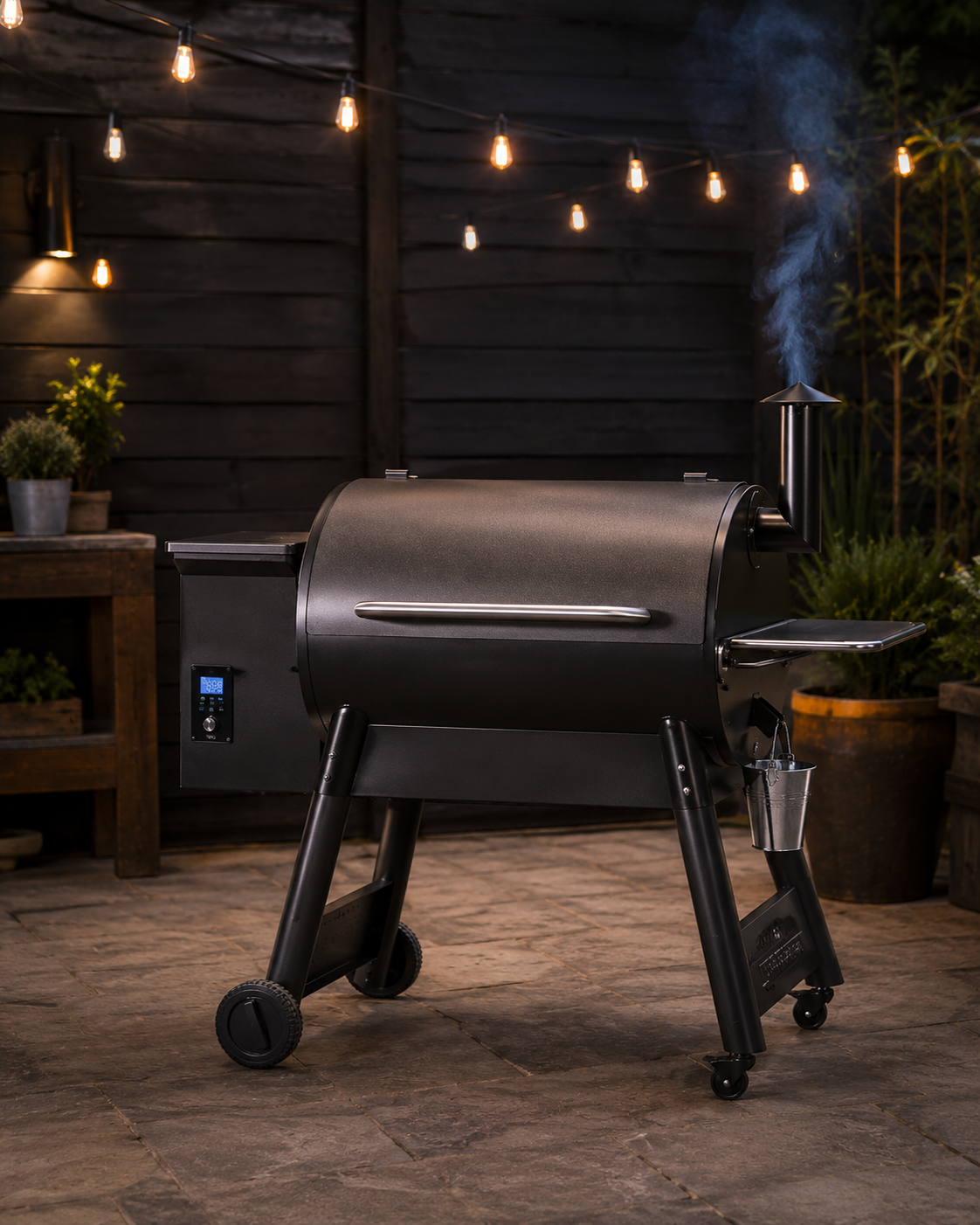
Think of a pellet grill as the organized member of the barbecue family. Instead of tossing fuel into the fire whenever things get dramatic, it measures the temperature and quietly handles the adjustments for you.
Food-grade wood pellets sit in the side hopper, patiently waiting for their shift. Unlike split wood, they do not need stacking, babysitting, or an inspirational speech before the cook begins.
A motorized auger feeds pellets from the hopper into the firepot as needed. It is basically a tiny conveyor belt with one job, and unlike most group projects, it actually does its share of the work.
An electric igniter lights the pellets inside the firepot while a fan supplies oxygen and circulates heat and smoke through the cooking chamber. Small fire, big responsibility.
The digital controller monitors the cooking temperature and tells the auger when to deliver more pellets. It quietly handles the fire while you take all the credit when dinner turns out great.
Pellet grills are excellent at making barbecue easier and more repeatable, but convenience always comes with a few tradeoffs. They are dependable, low-maintenance, and rarely dramatic—which is great for dinner, even if it gives you fewer heroic fire-management stories to tell.
Push-button temperature control makes long cooks far more predictable.
Steady heat lets you smoke overnight without treating the patio like a second job.
Fast startup and simple cleanup make it practical for regular weeknight and weekend cooking.
Wood pellets provide real wood-fired flavor with less ash and fuel handling than charcoal or split wood.
Electricity is required, so the grill is not much help during an outage unless you have backup power.
The smoke profile is usually milder than an offset or drum smoker. Convenient does not always mean loudest flavor in the room.
Motors, fans, probes, and controllers add parts that can eventually fail. Low-maintenance does not mean immortal.
Pellets must remain dry. Once moisture gets involved, they can swell into something closer to expensive sawdust oatmeal.
A pellet grill is the backyard friend who shows up early, keeps the temperature steady, and never asks you to split wood in the rain. It will not deliver the loudest smoke flavor or the most hands-on fire experience, but for repeatable barbecue with minimal drama, it is hard to beat. Choose one when you want to cook more often, stress less, and still serve food that tastes like you worked harder than you did.
BACK TO SMOKER COMPARISONOffset smokers are the old-school pitmasters of the backyard—serious about wood, smoke, and making sure you earn your barbecue. A fire burns inside the side firebox while heat and smoke travel through the main cooking chamber and out the smokestack. The design is simple, but running one well takes attention, clean-burning wood, and a willingness to check the fire before it starts making decisions without you. When managed properly, an offset can produce the deep smoke flavor and traditional bark that barbecue fans spend years chasing.
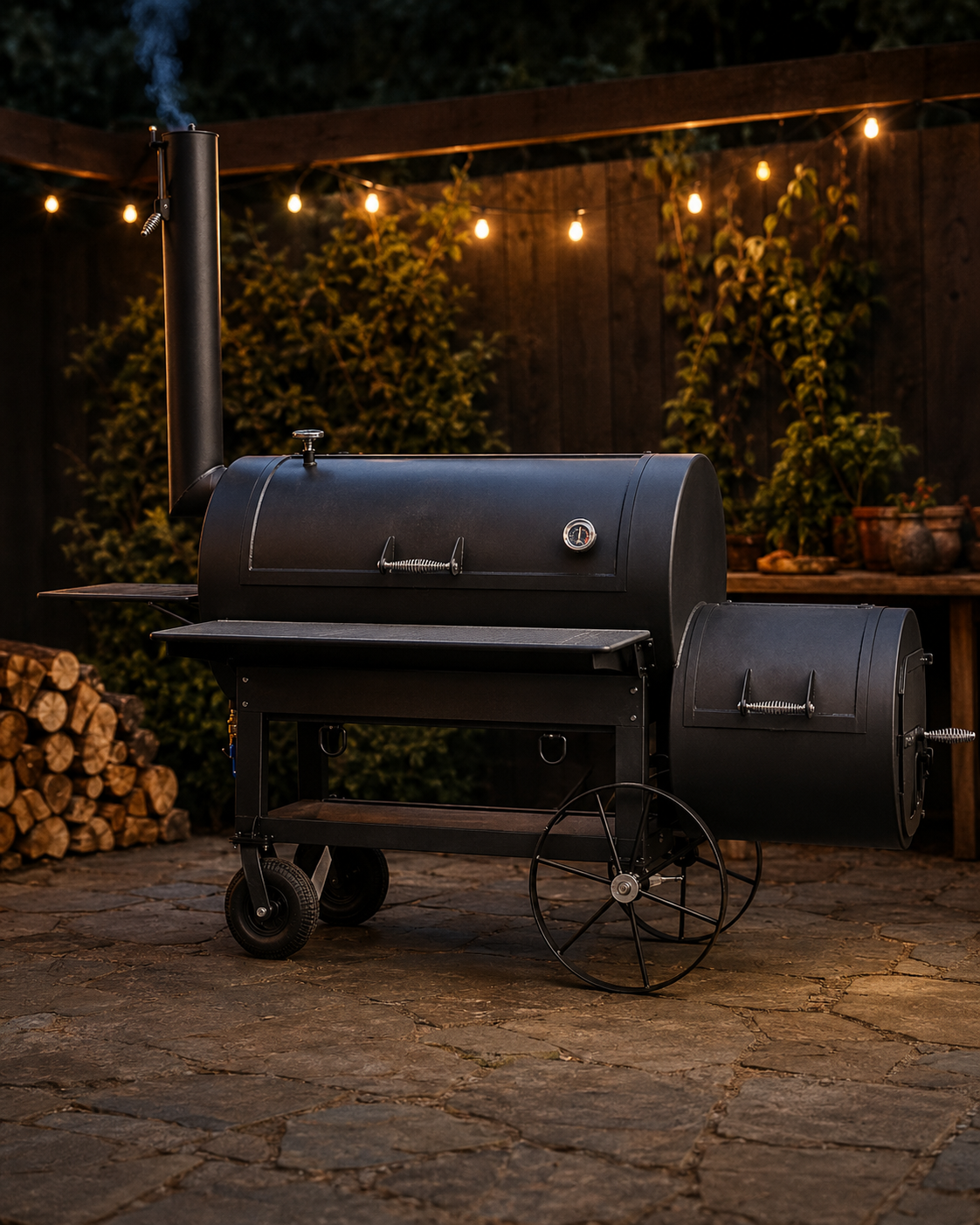
An offset smoker is refreshingly old-school: build a clean fire in the side firebox, then guide the heat and smoke through the cooking chamber using fuel, airflow, and patience. There is no digital controller quietly fixing your mistakes—the pit expects you to pay attention.
Split hardwood burns inside the side firebox, creating the heat and clean smoke that power the cook. This is where the offset reminds you that barbecue is part cooking and part small-scale fire department.
The intake vent feeds oxygen to the fire while the smokestack helps pull heat and smoke across the pit. Small vent changes matter, so resist the urge to spin everything like you are cracking a safe.
Hot air and smoke enter the main cooking chamber and move toward the smokestack, surrounding the meat along the way. The firebox side usually runs hotter, because even a well-built offset has opinions.
Add properly seasoned wood before the fire fades, maintain a small clean flame, and avoid choking the pit with heavy smoke. The goal is steady heat and thin blue smoke—not recreating a locomotive in the backyard.
Offset smokers can produce exceptional barbecue, but they are not interested in doing the work for you. Feed them clean-burning wood, manage the airflow, and pay attention to the temperature, and they will reward you with deep smoke flavor and serious bark. Ignore the fire too long, and the pit will gladly turn your relaxing afternoon into a troubleshooting exercise.
A clean split-wood fire can produce deep smoke flavor, dark bark, and the traditional barbecue character offset smokers are known for.
Large horizontal cooking chambers provide room for briskets, pork shoulders, ribs, and enough food to make the neighbors suddenly remember your name.
Direct control over the wood, airflow, and fire lets experienced cooks fine-tune the flavor and heat instead of relying on automated settings.
A well-built offset uses simple, heavy-duty parts and can last for many years without motors, digital controllers, or software updates getting involved.
The fire needs regular attention throughout the cook. An offset is not the cooker to choose when your plan includes disappearing for a four-hour nap.
Cheap models often use thin metal, leak smoke, and develop major hot spots. A bargain offset can teach fire management mostly by making everything harder.
You need a dependable supply of properly seasoned split wood, plus somewhere dry and organized to store it.
Cold weather, wind, and rain can affect temperatures and fuel use, because the smoker has no interest in pretending the weather does not exist.
An offset smoker is the backyard pitmaster who arrives with split wood, strong opinions, and no interest in shortcuts. It demands more attention than any other smoker in this guide, but the reward is deep wood-fired flavor, serious bark, and complete control over the cooking process. Choose an offset when tending the fire sounds like part of the experience—not an inconvenience—and you are willing to practice until clean smoke and steady heat become second nature.
BACK TO SMOKER COMPARISONDrum smokers are the efficient workhorses of backyard barbecue—compact, fuel-conscious, and surprisingly bold for something shaped like a steel barrel. A charcoal basket burns near the bottom while heat and smoke rise vertically around the food. Drippings can fall toward the hot coals, creating the rich, unmistakable flavor drum fans love. They require more attention than a pellet grill, but once the vents are dialed in, a drum can cruise steadily without demanding that you hover over it like an anxious camp counselor.
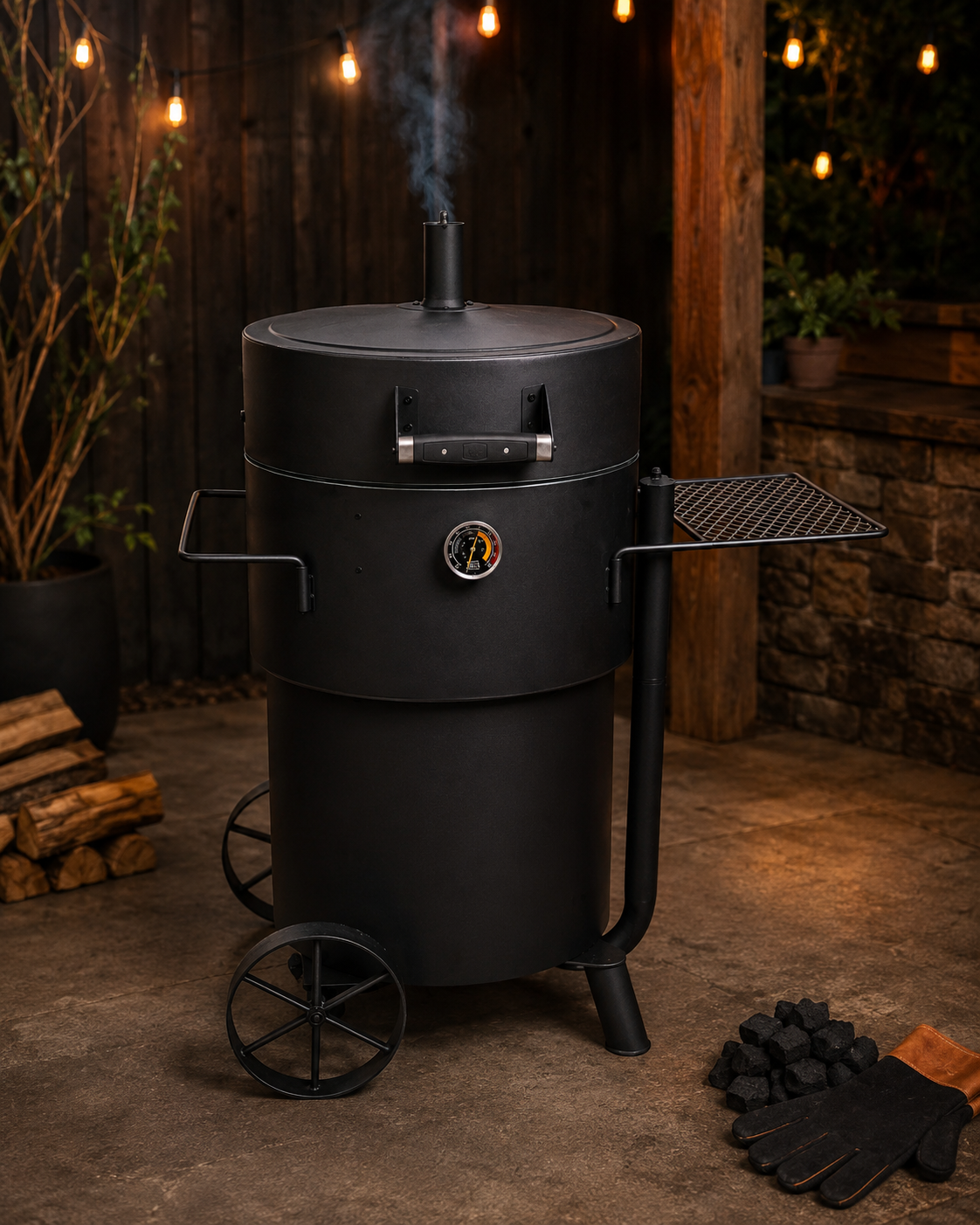
A drum smoker keeps things simple: charcoal burns near the bottom while heat and smoke rise naturally through the barrel toward the food above. The compact vertical design uses fuel efficiently, and drippings falling toward the hot coals can create the bold, unmistakable flavor drum smokers are known for.
A charcoal basket sits near the bottom of the drum and holds the main fuel supply. Wood chunks can be mixed into the charcoal to add smoke without needing a separate firebox or a full stack of split logs.
Adjustable vents near the bottom regulate how much oxygen reaches the charcoal. More airflow increases the heat, while reducing the airflow slows the burn. Small adjustments matter, so give the smoker time to respond before changing everything again.
Because the cooking grate sits above the charcoal, heat and smoke travel vertically through the drum and surround the food. The short, direct path helps the smoker cook efficiently while building strong barbecue flavor.
The exhaust vent on the lid allows heat and smoke to leave the drum, creating the draft that keeps the fire burning cleanly. Once the intake and exhaust are balanced, a drum smoker can hold steady temperatures with surprisingly little babysitting.
Drum smokers deliver bold charcoal flavor, efficient fuel use, and steady heat from a cooker that takes up surprisingly little patio space. Once the airflow is adjusted correctly, a well-designed drum can run for hours without constant attention. It is simple equipment, but simple does not mean careless—the fire is still sitting directly beneath dinner.
The vertical design uses a compact footprint while still providing enough cooking space for pork shoulders, ribs, chicken, and other backyard favorites.
A contained charcoal basket can provide long, efficient burns without requiring a large pile of fuel or constant wood additions.
Heat, smoke, and flavorful drippings interact inside the drum, producing the bold barbecue character that drum-smoker fans appreciate.
Once the intake and exhaust are balanced, a drum can maintain steady cooking temperatures with less babysitting than an offset smoker.
The food sits closer to the charcoal than it does in many other smokers, so uncontrolled heat can turn gentle smoking into an unexpected grilling session.
Small airflow changes can noticeably affect the temperature. Spinning every vent at once usually creates more confusion than control.
The narrow vertical body can make access awkward when multiple racks, hanging meat, or large cuts are loaded at the same time.
Grease and ash collect near the bottom of the cooker, making regular cleanup important for clean airflow, safer operation, and better-tasting food.
A drum smoker is a strong choice for cooks who want bold charcoal-and-wood flavor without giving up half the backyard. Its vertical design uses fuel efficiently, reaches temperature quickly, and can hold steady once the airflow is dialed in. It is not quite as hands-off as a pellet grill, and the direct heat can punish careless vent adjustments, but the simplicity, compact footprint, and unmistakable flavor make it one of the most capable smokers for the money. Choose a drum when you want a rugged cooker that works hard, cooks fast, and does not need a sprawling pit crew.
BACK TO SMOKER COMPARISONKamado smokers are the overachievers of backyard cooking—happy to smoke a pork shoulder low and slow, then turn around and sear steaks at temperatures that make ordinary grills nervous. Their thick ceramic walls hold heat and moisture exceptionally well, while adjustable top and bottom vents control the airflow. They are efficient, versatile, and capable of excellent results, but they reward careful adjustments. Make one dramatic vent change, and the kamado may continue climbing long after you thought the conversation was over.
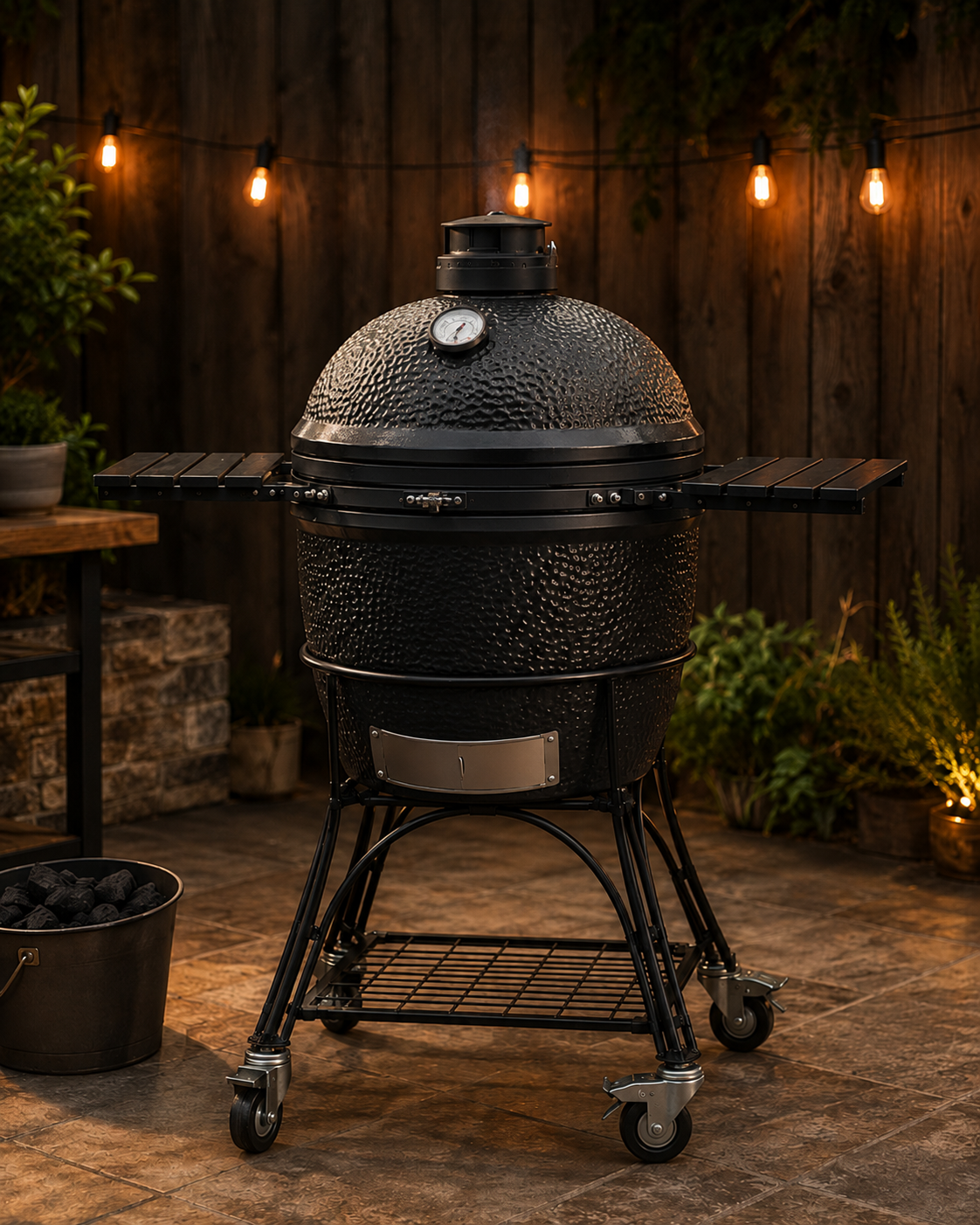
A kamado uses a charcoal fire inside a thick ceramic body that traps heat, holds moisture, and responds to small airflow adjustments. The lower draft door feeds oxygen to the charcoal, while the top vent controls how quickly hot air and smoke leave the cooker. Once the ceramic is fully heated and the vents are balanced, the kamado can maintain steady temperatures for hours using surprisingly little fuel.
Natural lump charcoal sits inside the ceramic firebox near the bottom of the cooker. Wood chunks can be added for smoke flavor, but a small amount goes a long way inside the tightly sealed cooking chamber.
The lower draft door controls how much oxygen reaches the charcoal. Opening it increases airflow and heat, while closing it slows the fire. Make small adjustments—the ceramic cooker may continue heating long after an impatient vent change.
Thick ceramic walls absorb heat and radiate it evenly around the food. This helps the kamado hold stable temperatures, retain moisture, and recover efficiently after the lid is opened.
The upper exhaust vent regulates how quickly heat and smoke leave the cooker. Working together with the lower vent, it lets the kamado move from low-and-slow smoking to high-temperature grilling without changing equipment.
Kamado smokers combine excellent heat retention, efficient charcoal use, and impressive versatility inside one compact cooker. They can smoke, roast, grill, and sear with outstanding results, but their ceramic construction and sensitive airflow controls reward patience. A kamado can handle nearly any backyard cooking job—provided you do not treat every vent adjustment like an emergency.
Thick ceramic walls retain heat exceptionally well, helping the cooker maintain steady temperatures during long smoking sessions.
Kamados use charcoal efficiently, allowing extended cooks without repeatedly adding fuel or emptying half a bag into the firebox.
The same cooker can handle low-and-slow barbecue, roasting, baking, direct grilling, and extremely high-temperature searing.
The enclosed ceramic chamber holds moisture well, helping meat remain juicy while still developing a flavorful exterior..
Quality ceramic kamados can be expensive, especially after adding carts, heat deflectors, covers, and other accessories.
The heavy ceramic body is difficult to move and can crack if dropped, tipped, or handled like ordinary metal patio furniture.
Temperature changes happen slowly once the ceramic is heated. Overshoot your target, and the cooker may take its sweet time forgiving you.
Cooking space can feel limited when preparing several large cuts, particularly on smaller models without additional rack systems.
A kamado is an excellent choice for cooks who want one compact cooker capable of smoking, roasting, grilling, baking, and high-heat searing. Its thick ceramic body holds heat efficiently, uses charcoal sparingly, and helps food retain moisture, but the weight, price, and slower temperature changes require patience and a bigger budget. Choose a kamado when versatility matters, patio space is limited, and you want a cooker that can handle nearly every assignment without demanding an entire collection of equipment.
BACK TO SMOKER COMPARISONCharcoal kettles are the backyard legends that prove great barbecue does not require a massive smoker or a painful equipment payment. By arranging the charcoal for indirect heat and controlling the top and bottom vents, a kettle can smoke ribs, pork shoulders, chicken, and plenty more while still handling everyday grilling. It takes more setup and fire management than a dedicated smoker, but the versatility, affordability, and small footprint make the kettle one of the smartest ways to learn real charcoal cooking.
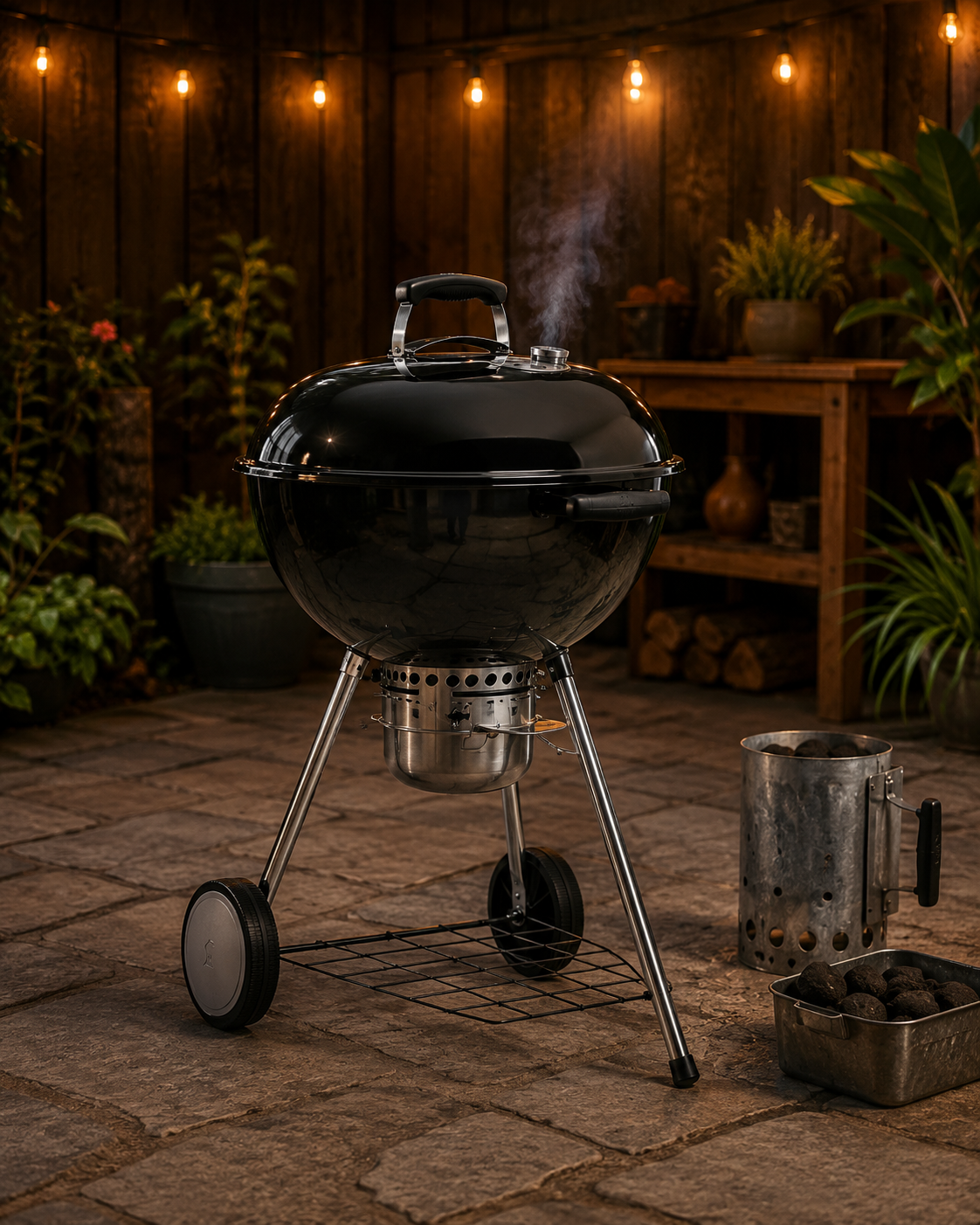
A charcoal kettle becomes an effective smoker by separating the fire from the food and controlling how air moves through the cooker. Charcoal and wood chunks sit on one side while the meat cooks on the cooler side beneath the closed lid. The lower intake feeds oxygen to the fire, and the lid vent pulls heat and smoke across the food before releasing it from the kettle.
Charcoal is placed along one side of the kettle, in two charcoal baskets, or arranged in a slow-burning snake around the edge. The food remains away from the active coals so it cooks with circulating heat instead of direct flame.
A few hardwood chunks placed on or near the lit charcoal create the smoke. The kettle needs less wood than a large offset, so adding half the woodpile usually produces bitter food rather than better barbecue.
The intake vent beneath the bowl controls how much oxygen reaches the charcoal. Opening it raises the temperature, while closing it slows the burn. Small adjustments work best because the fire needs time to respond.
Positioning the lid vent above the food helps draw heat and smoke from the charcoal side across the cooking grate. Keep the exhaust vent mostly open so the fire burns cleanly and the smoke continues moving instead of becoming trapped inside the kettle.
A charcoal kettle is affordable, compact, and far more capable than its simple shape suggests. With the right charcoal arrangement and vent control, it can smoke, grill, roast, and sear on the same cooker. It does require more hands-on setup than a dedicated smoker, but few pieces of backyard equipment deliver this much versatility for the money.
A quality kettle costs far less than most dedicated smokers while still producing excellent low-and-slow barbecue.
The same cooker can handle indirect smoking, direct grilling, two-zone cooking, roasting, and high-heat searing.
Its compact footprint works well on smaller patios and makes the kettle easier to store or reposition than larger smokers.
Charcoal baskets, snake arrangements, and simple vent adjustments give cooks several reliable ways to control heat and cooking time..
Smoking requires careful charcoal placement and temperature management because the kettle was designed as a grill first.
Cooking space becomes limited when the charcoal occupies one side of the grate and the food must remain inside the indirect zone.
Adding charcoal or wood during a long cook can be awkward unless the cooking grate includes hinged access panels.
Wind, cold, and frequent lid opening can affect temperatures more noticeably than they would in a heavy insulated smoker.
A charcoal kettle is one of the smartest choices for backyard cooks who want real charcoal flavor without investing in a large dedicated smoker. It can grill burgers on Friday, smoke a pork shoulder on Saturday, and sear steaks on Sunday without taking over the patio. The tradeoff is that smoking requires careful charcoal placement, airflow control, and a little practice. Choose a kettle when affordability, versatility, and compact size matter more than push-button convenience.
BACK TO SMOKER COMPARISONElectric smokers are the low-stress members of the backyard barbecue family—plug them in, set the temperature, add wood chips, and let the heating element handle the fire. Most use an insulated vertical cabinet with cooking racks above a small wood-chip tray and water pan. They will not deliver the same heavy smoke profile or hands-on experience as an offset, but they make steady low-temperature cooking approachable for beginners, apartment patios where permitted, and anyone who would rather monitor dinner than negotiate with charcoal and wood.
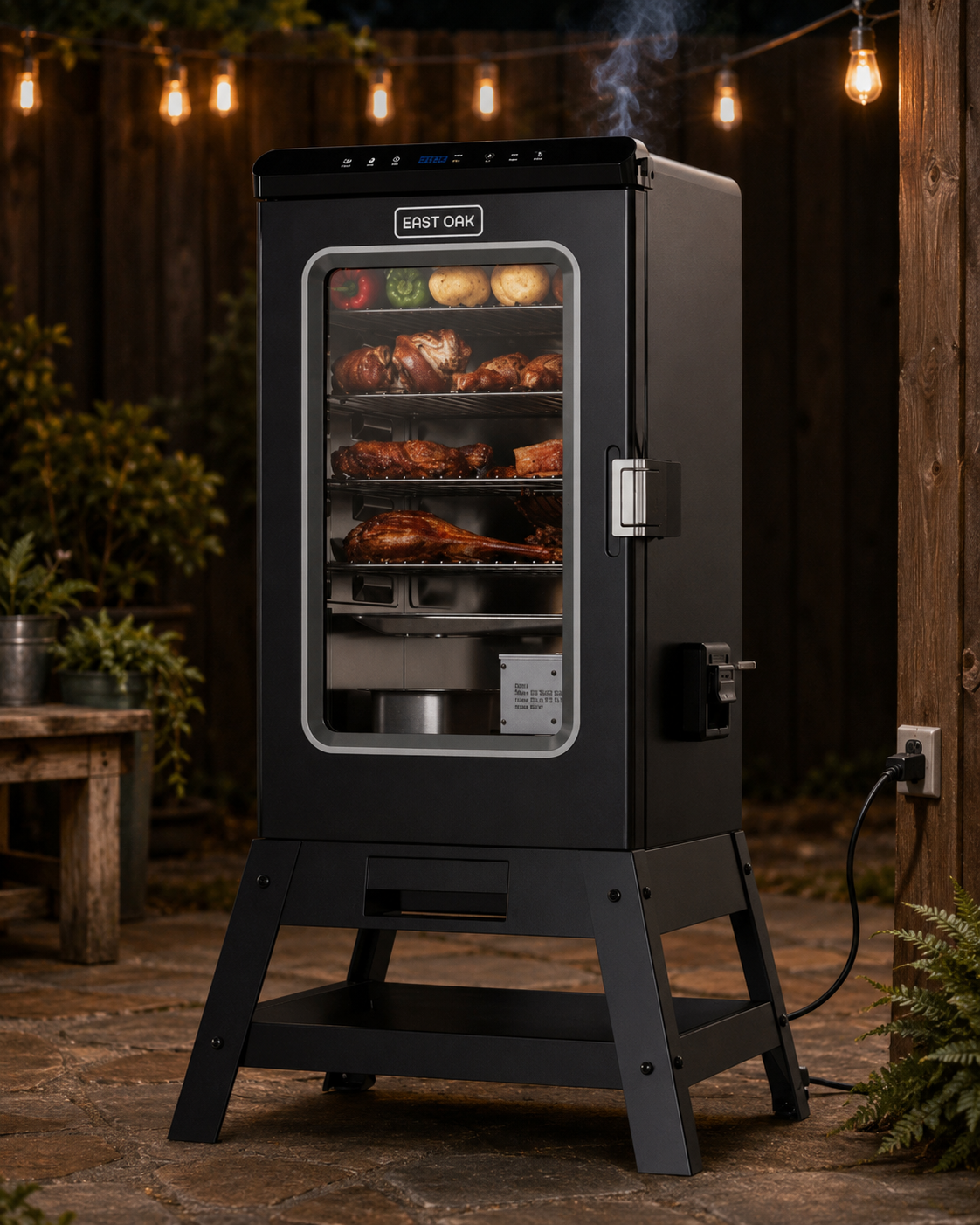
An electric smoker uses a thermostatically controlled heating element instead of charcoal or a wood fire. The element warms the cabinet, heats a small tray of wood chips, and maintains the selected temperature while smoke circulates around the food. It is the barbecue equivalent of the dependable friend who follows the instructions and does not turn dinner into a fire-management seminar.
An electric heating element near the bottom of the cabinet supplies the cooking heat. The digital controller switches the element on and off as needed to keep the smoker close to the selected temperature.
Wood chips are placed inside a tray or loaded through a side-access tube near the heating element. As they warm and smolder, they release smoke without requiring an open flame or a full charcoal fire.
The insulated vertical cabinet traps heat while allowing warm air and smoke to move around the cooking racks. This enclosed design helps the smoker maintain steady low temperatures with very little attention.
A small upper vent allows moisture, heat, and smoke to leave the cabinet while maintaining airflow through the smoker. Keep it open enough for clean circulation rather than trapping stale smoke inside with the food.
Electric smokers remove most of the fire management from low-and-slow cooking. Set the temperature, add wood chips, and let the heating element maintain the cabinet while you focus on the food. They are convenient, consistent, and beginner-friendly, but that simplicity comes with a lighter smoke profile and less traditional barbecue character.
Digital temperature controls make it easy to maintain steady low heat without managing charcoal, vents, or a live wood fire.
The insulated vertical cabinet provides multiple cooking racks while using relatively little patio space.
Electric smokers are approachable for beginners and work well for cooks who want dependable results with minimal supervision.
They perform especially well for jerky, sausage, fish, poultry, and other foods that benefit from controlled low-temperature cooking.
The smoke flavor is usually milder than what you get from charcoal, split wood, or a traditional offset smoker.
The smoker requires a nearby electrical outlet, which limits placement and makes power interruptions part of the cooking plan.
Many models struggle to reach the high temperatures needed for crisp skin, strong bark, or proper searing.
Heating elements, controllers, and digital components can eventually fail, giving the simplest smoker in the yard the most electronics to worry about.
An electric smoker is a practical choice for beginners, busy cooks, and anyone who wants steady low-temperature cooking without managing charcoal or tending a wood fire. It delivers consistent results, uses patio space efficiently, and makes foods like jerky, sausage, poultry, and pork especially approachable. The tradeoff is a lighter smoke profile, limited high-heat performance, and dependence on electricity. Choose an electric smoker when convenience and consistency matter more than traditional fire management or intense wood-fired flavor.
BACK TO SMOKER COMPARISONBETTER TECHNIQUE. BETTER BBQ.
Learn how to stabilize your smoker, avoid major temperature swings, and make small adjustments without chasing the fire throughout the cook.
Learn how to build a clean-burning fire, recognize thin blue smoke, and avoid the heavy white smoke that can leave barbecue tasting bitter or dirty.
Understand how intake and exhaust vents work together to control oxygen, temperature, and smoke so your fire stays clean and predictable.
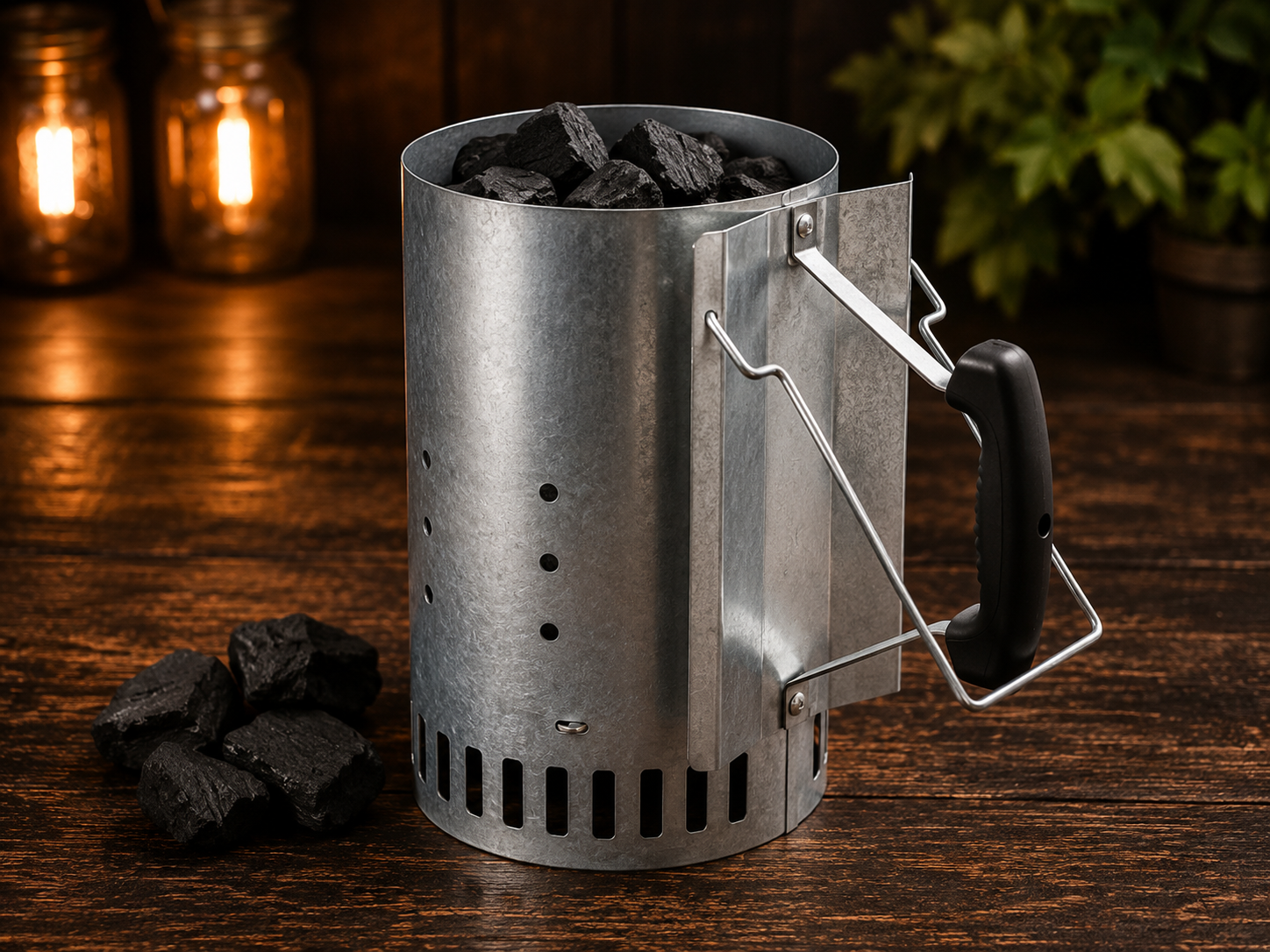
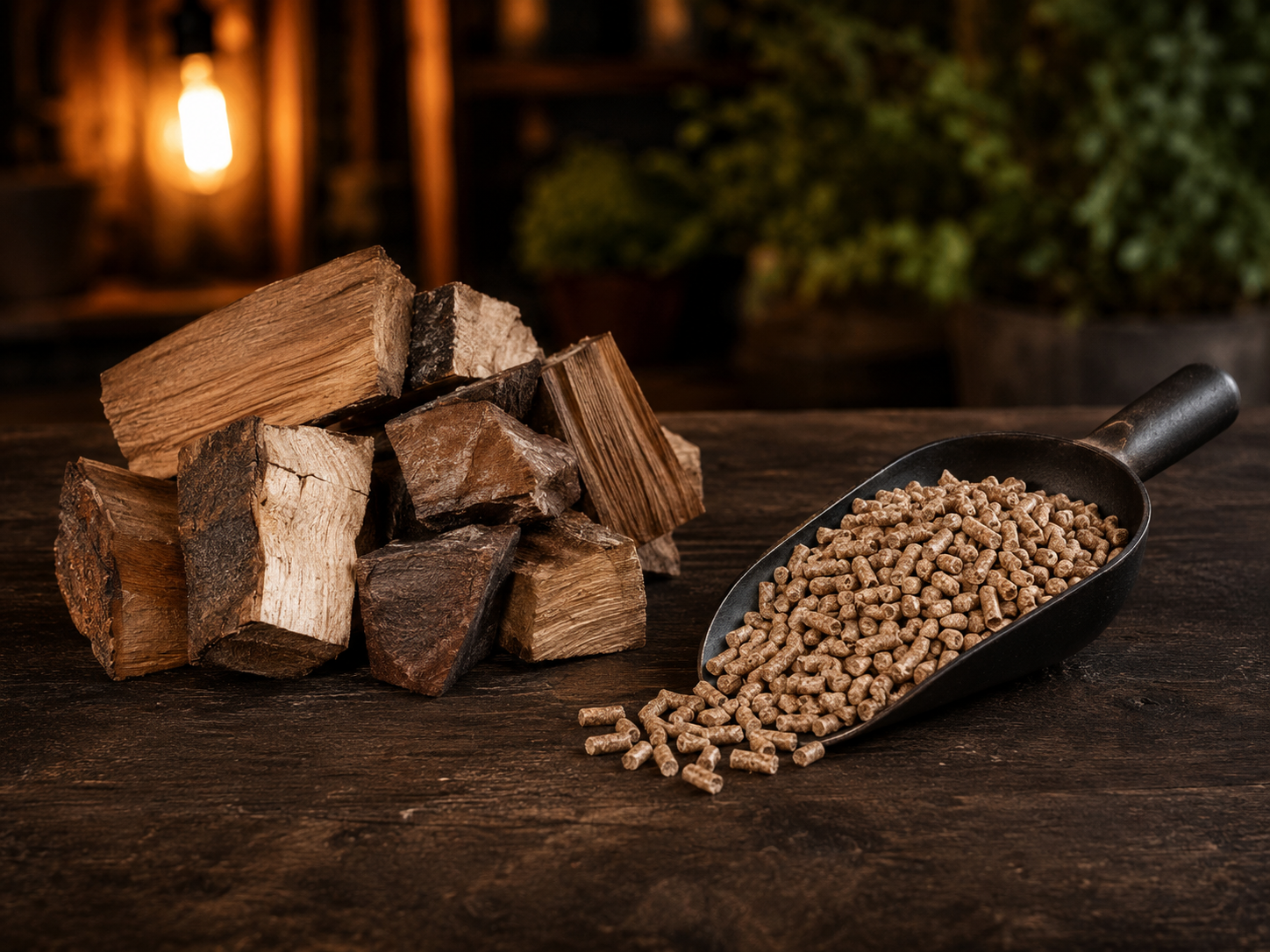
Choose the right charcoal, wood chunks, chips, or split logs for your smoker and learn how fuel quality affects heat, burn time, and flavor.
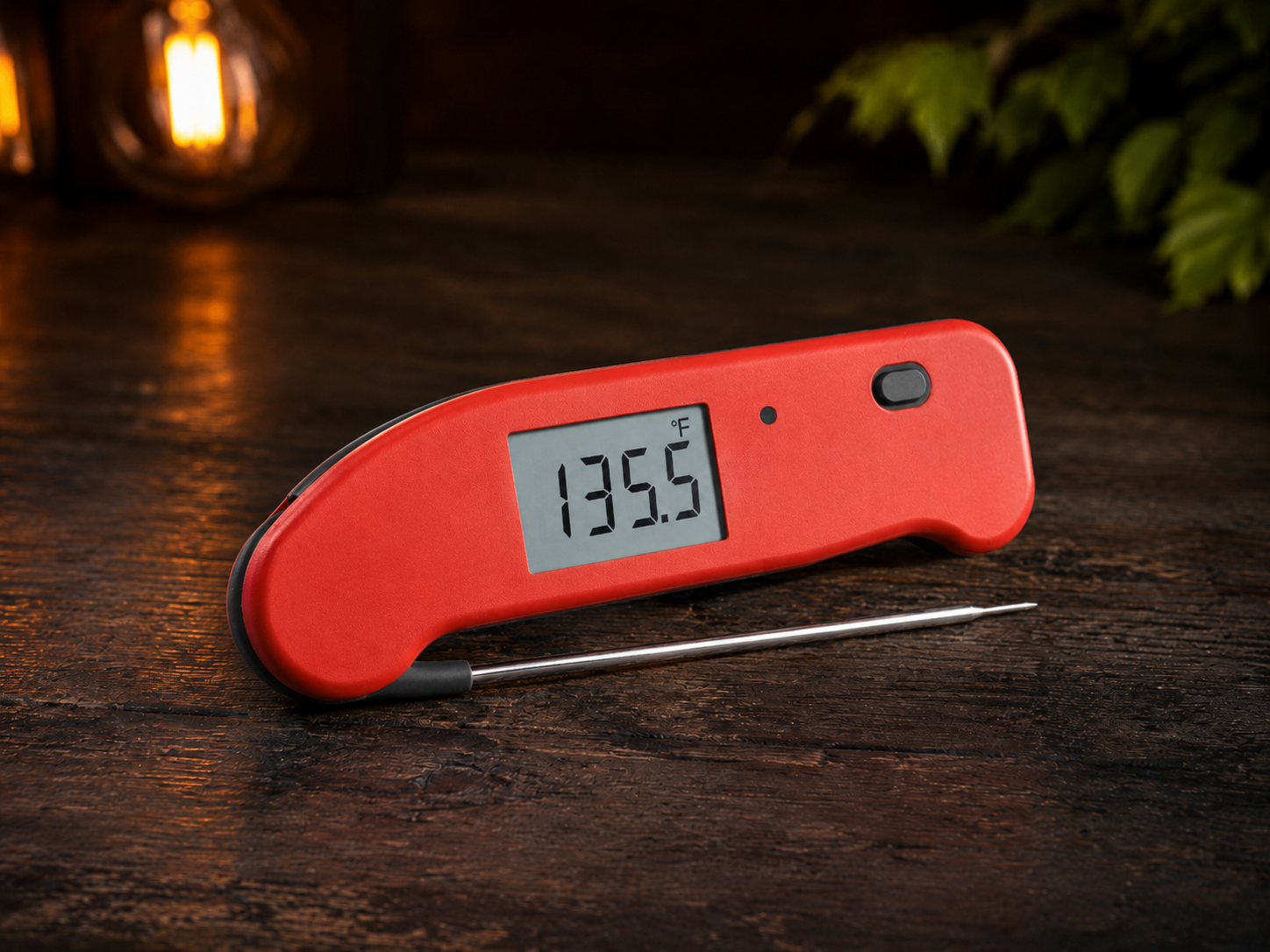
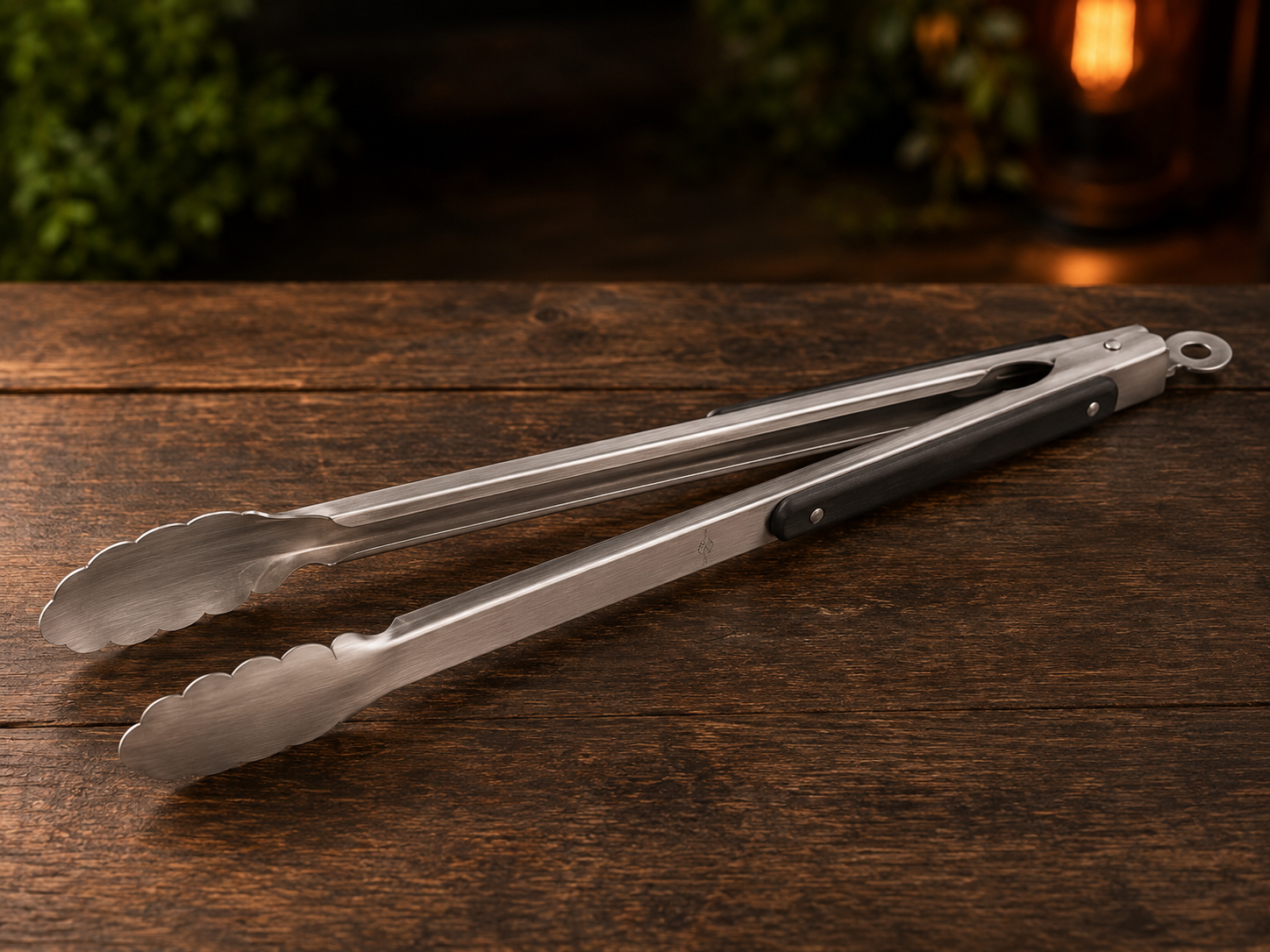
Use an instant-read thermometer to verify doneness, understand safe internal temperatures, and cook meat by temperature instead of relying on time alone.
Learn why resting matters, how long different cuts should rest, and how to hold barbecue properly without losing heat, moisture, or bark.
Affiliate Disclosure: This section contains affiliate links. If you purchase through one of these links, we may earn a commission at no additional cost to you. As an Amazon Associate I earn from qualifying purchases.
![{"type":"elementor","siteurl":"https://sgandg.com/wp-json/","elements":[{"id":"2a6f12a","elType":"widget","isInner":false,"isLocked":false,"settings":{"classes":{"$$type":"classes","value":["e-2a6f12a-0a4e751"]},"image":{"$$type":"image","value":{"src":{"$$type":"image-src","value":{"id":{"$$type":"image-attachment-id","value":7293},"url":null}}}},"link":{"$$type":"link","value":{"isTargetBlank":null}},"_element_id":""},"defaultEditSettings":{"defaultEditRoute":"content"},"interactions":{},"elements":[],"widgetType":"e-image","editSettings":{"defaultEditRoute":"content"},"editor_settings":{"title":"Gear Image"},"styles":{"e-2a6f12a-0a4e751":{"id":"e-2a6f12a-0a4e751","label":"local","type":"class","variants":[{"meta":{"breakpoint":"desktop","state":null},"props":{},"custom_css":{"raw":"c2VsZWN0b3Igewp3aWR0aDogMTAwJTsKfQoKc2VsZWN0b3IgaW1nIHsKZGlzcGxheTogYmxvY2s7CndpZHRoOiAxMDAlOwpoZWlnaHQ6IDIxMHB4OwpvYmplY3QtZml0OiBjb3ZlcjsKb2JqZWN0LXBvc2l0aW9uOiBjZW50ZXI7CmJvcmRlci1yYWRpdXM6IDEycHg7Cn0="}}]}},"htmlCache":""}]}](https://sgandg.com/wp-content/uploads/2026/07/Leave-in-Gudie.png)
The best smoker is the one that fits the way you actually cook. Compare the options, choose the setup that matches your time and experience, and start building better barbecue in your own backyard.
COMPARE SMOKERS AGAIN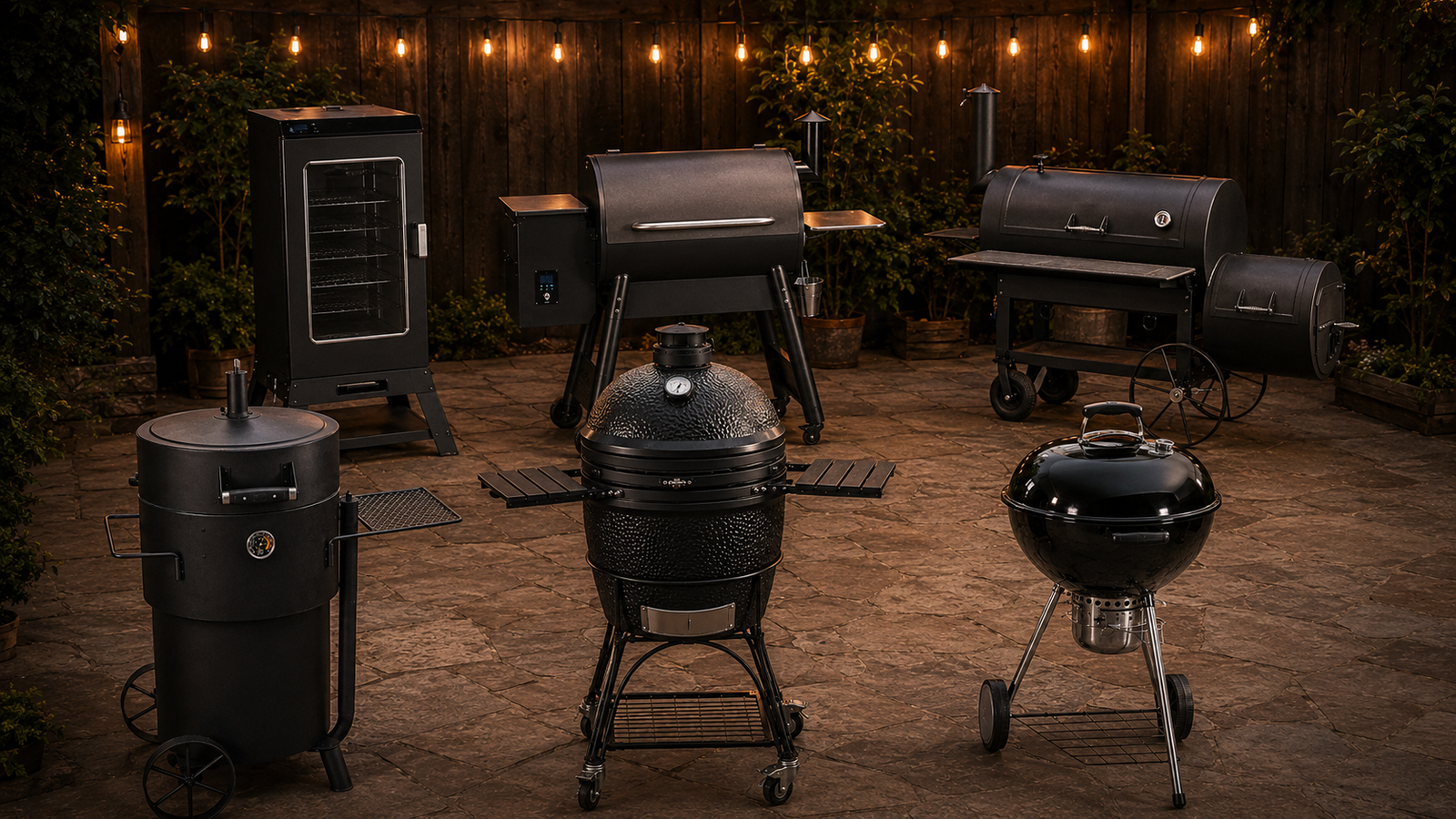

Get approachable recipes, practical BBQ tips, and helpful guides delivered straight to your inbox.
JOIN THE COMMUNITYGet new recipes, practical backyard cooking tips, gear recommendations, and subscriber-only updates delivered straight to your inbox. Plus your free Temp Guide.
No spam. Just useful backyard cooking content. Unsubscribe anytime.
